What AI detector does GNTC use? What Is Actually Confirmed
If you are searching what AI detector does GNTC use, the most accurate answer is that Georgia Northwestern Technical College has not publicly identified a specific product. Its current public handbook explains academic misconduct and the use of unauthorised technology, but it does not name Turnitin, GPTZero, Copyleaks, or another detector.
That distinction matters because several third-party pages turn a possibility into a fact. This guide separates what GNTC confirms from what people merely assume, explains what a detection score can and cannot show, and gives you practical steps for protecting original work.
Quick Answer
No public GNTC policy, handbook page, or official announcement I found names a particular AI detector. Turnitin is a plausible guess because many colleges use it, but it remains a guess unless GNTC or your instructor confirms it. Your syllabus and assignment instructions are more useful than a forum claim because they establish what assistance is allowed in your specific class.
Key Takeaways
- GNTC’s current public Student Code of Conduct does not identify an AI detector by name.
- The code does prohibit unauthorised technology and defines plagiarism, fabrication, and other forms of academic misconduct.
- A Turnitin AI percentage is separate from its similarity score and is not proof that misconduct occurred.
- Independent research has found meaningful accuracy limits and risks of false classification.
- The best protection is a clear writing record: notes, sources, outlines, drafts, version history, and instructor guidance.
What AI detector does GNTC use: The Verified Answer
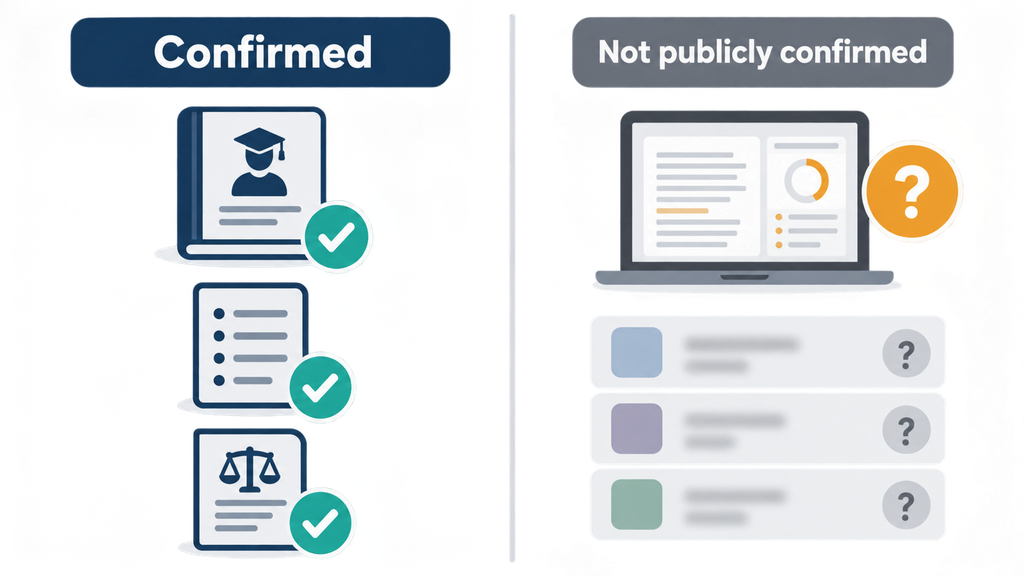
The honest answer is “not publicly confirmed.” I reviewed GNTC’s current public materials, including the 2026–2027 handbook, and found no official statement naming an AI detector. Search results and forum discussions often mention Turnitin or GPTZero, but none of those guesses proves what the college licenses or what an individual instructor enables.
This absence of public confirmation does not prove that GNTC uses no detector. It only means readers should not state a product name as fact without direct evidence from the college, an instructor, or an actual course submission screen.
| Question | What the public evidence shows | Confidence |
|---|---|---|
| Has GNTC named a specific AI detector? | No product is named in the current public handbook or policy pages reviewed. | Confirmed absence from reviewed public sources |
| Does GNTC prohibit academic misconduct? | Yes. Its code covers cheating, fabrication, plagiarism, and unauthorised technology. | Confirmed |
| Does GNTC use Turnitin? | It may, but I found no public GNTC source confirming it. | Unconfirmed |
| Can an instructor set additional rules? | Yes. The code recognises rules imposed on students in a class or program. | Confirmed |
| Is a detector score automatic proof? | No reliable source supports treating a score alone as proof. | Strongly supported |
The same source-checking habit is useful beyond this question. TechMezz’s guide to checking what is actually verified about an unfamiliar AI product shows why an official source should carry more weight than repeated claims, while its editorial fact-checking standards explain the value of checking important statements against primary evidence.
What GNTC’s Current Academic Rules Actually Say
GNTC’s current Student Code of Conduct says academic misconduct includes cheating, fabrication, plagiarism, and helping another person commit misconduct. Its cheating section includes the use or possession of unauthorised material or technology during an examination or other work submitted for evaluation or a grade.
The wording focuses on authorisation rather than naming every possible tool. That means the practical question is not simply whether software was used, but whether the instructor allowed that type of assistance and whether the student followed any disclosure or citation requirements.
The code also treats violations of class- or program-specific rules as misconduct. For that reason, your course syllabus, assignment directions, program handbook, and written instructor guidance can be more specific than the college-wide handbook.
A Simple Question to Send Your Instructor
If the policy is unclear, ask before submitting the assignment. A neutral message keeps the focus on compliance rather than on a particular detector:
Hello, I want to make sure I follow the rules for this assignment. Which tools, if any, may I use for brainstorming, grammar, citations, or editing, and do you want that assistance disclosed? Thank you for clarifying.

Why Turnitin Is Often Guessed but Cannot Be Assumed
Turnitin appears frequently in discussions because it combines text-similarity checking with an optional AI Writing Report and can be integrated into learning platforms. However, widespread use elsewhere is not evidence of a GNTC contract, campus-wide setting, or instructor-level choice.
Even when a college licenses one product, use may differ by course or assignment. An instructor may enable a similarity report without an AI report, use a different review method, or evaluate the writing process through drafts and conversations instead.
It also helps to separate two reports that students often confuse. A similarity score measures matching text against sources in a database, while an AI writing indicator estimates how much qualifying prose may have characteristics associated with generated or altered text. One score does not determine the other.
| Feature | Similarity report | AI writing report |
|---|---|---|
| Main purpose | Finds text that matches indexed sources | Estimates whether qualifying prose may be generated or AI-altered |
| What it can show | Matching passages and possible sources | A percentage or indicator plus highlighted qualifying text |
| What it cannot decide | Whether a match is properly quoted or constitutes plagiarism | Who wrote the text or whether misconduct occurred |
| Human review needed? | Yes | Yes |

How an AI Detector Tool Works and Where It Fails
An AI detector tool does not look inside a file and discover its true author. It analyses patterns in the submitted text and produces a statistical estimate based on the model, training data, supported language, document type, and amount of prose available.
That is why two tools can return different results for the same paper. A free GPT detector may use different thresholds and training data from an institutional system, while a ChatGPT detector may market a simple probability as if it were a definite finding.
Turnitin’s own guide to its AI Writing Report says its model can misidentify human-written, generated, and paraphrased text. The company explicitly says the report should not be the sole basis for adverse action against a student and that human judgment and institutional policy are still required.
That guide also shows why casual tests can mislead. Turnitin currently requires at least 300 words of prose in a long-form format, and it does not reliably assess material such as poetry, code, tables, bullet points, scripts, or annotated bibliographies. Scores from 1% through 19% are not displayed numerically and appear as an asterisk because that range has a higher risk of false positives.
What Independent Research Adds
A peer-reviewed evaluation of 14 AI-text detection systems concluded that the tested tools were neither accurate nor reliable enough to serve as evidence of academic misconduct on their own. The study is valuable as a warning, but it tested systems available in early 2023, so it should not be treated as a current league table for products that have since changed.
Another peer-reviewed study found that GPT detectors were biased against non-native English writers. This does not mean every detector will flag every multilingual writer, but it shows why a score needs context and why a student’s drafts and writing history matter.

How to Protect Original Work Before Submission
I recommend building evidence of your writing process instead of chasing a low score from several public checkers. This approach helps whether an instructor uses Turnitin, a different system, or no detector at all.
- Read the assignment rules first. Check what is allowed for brainstorming, grammar, translation, citation help, and editing.
- Ask about unclear tools in writing. Save the instructor’s reply with the assignment materials.
- Keep research notes and source details. Record titles, links, quotations, page numbers, and the ideas you drew from each source.
- Save your outline and early drafts. A rough version often provides clearer authorship evidence than a polished final file alone.
- Use version history when available. It can show how the document developed over time instead of appearing all at once.
- Document permitted assistance. If the instructor requests a disclosure, state what tool you used and what it helped you do.
- Keep the submission receipt. Save the final file and proof of when and where you submitted it.
Privacy matters too. Uploading an unpublished paper to an unknown free checker may expose your work to unclear storage, reuse, or deletion practices, and its score may not resemble the system used in your class. Read the service’s privacy terms before sharing a full assignment.
Common Mistakes to Avoid
- Treating a forum comment as an official GNTC policy
- Assuming that a low detector score makes unauthorised assistance acceptable
- Rewriting honest work only to satisfy a free checker
- Deleting notes and drafts after submitting the final paper
- Confusing a similarity percentage with an AI writing percentage
- Waiting for a concern to arise before asking what the instructor permits

What to Do If Your Assignment Is Flagged
Stay calm and ask for specific information. A flag is the beginning of a review, not a technical demonstration of who wrote the paper, and a constructive response gives the instructor better evidence to consider.
- Ask which policy or assignment instruction is relevant.
- Request to see the report, including the passages that raised concern.
- Provide your outline, notes, drafts, source list, and version history.
- Explain your writing process in your own words.
- Identify any permitted grammar, translation, citation, or editing support you used.
- Keep copies of all messages and decisions.
- Follow the formal process if the concern is not resolved.
Guidance from the University of Southern California recommends that instructors avoid relying on an AI score as the sole evidence and instead review context and speak with the student. That guidance does not control GNTC, but it illustrates a fair, evidence-based review process.
For GNTC-specific action, use the college’s published academic and grade appeal procedure. It directs a student to raise an academic complaint with the instructor in writing first and provides deadlines and later appeal steps, so consult the current page promptly rather than relying on a summary.

Frequently Asked Questions
Does GNTC use Turnitin?
GNTC does not publicly confirm Turnitin in the current handbook or policy pages I reviewed. It may be available in some courses, but you should ask your instructor or check the actual submission screen rather than treating that possibility as fact.
Is a ChatGPT detector score proof of cheating?
No. A ChatGPT detector produces an estimate, and both vendors and independent researchers describe important limitations. A responsible review should consider the assignment rules, the text, the student’s drafts, and an explanation of the writing process.
Can a GPT detector flag human writing?
Yes, false positives can occur. Research has identified particular concerns for non-native English writing, and results can also vary with text length, genre, translation, and the detector version.
Does a low AI detection score mean my work follows the rules?
No. Compliance depends on what your instructor authorised and whether you followed citation or disclosure requirements, not on receiving a low score. A detector cannot grant permission that the syllabus does not give.
What evidence should I keep if I wrote the assignment myself?
Keep research notes, source records, outlines, dated drafts, document version history, and your submission confirmation. Together, these materials show how your ideas and wording developed over time.
Conclusion: Verify the Rule and Preserve Your Process
So, what AI detector does GNTC use? The current public record does not identify one, and naming Turnitin, GPTZero, or another product as certain would go beyond the evidence. What GNTC does publish is more important: unauthorised technology, plagiarism, fabrication, and course-specific rule violations can fall under academic misconduct.
Start with the current handbook, then read your syllabus and assignment directions. If anything is unclear, ask your instructor in writing and keep a record of how you developed the work. For more carefully sourced technology explainers, explore TechMezz’s AI guides and share this guide with a student who needs a verified answer rather than another rumour.