

How HCS 411gits software built: What Can We Verify?
If you searched how HCS 411gits software is built, you probably want to know its architecture, programming languages, and development process. The direct answer is that I could not verify an official developer, repository, or technical document for a product under the exact name “HCS 411gits.” Articles that describe a particular stack or release should therefore be read as claims, not established specifications.
That does not prove the software cannot exist as a private or differently named project. This guide separates the evidence available for the exact name from a practical explanation of how comparable software would be designed, built, tested, and updated.
Quick answer: how HCS 411gits software is built is not documented
There is no reliable public build record I can point to for that exact name. Without a confirmed publisher or source repository, it would be misleading to say that HCS 411gits definitely uses a particular framework, database, cloud provider, or deployment method.
There is a real product called Highway Capacity Software (HCS) from the University of Florida’s McTrans Center. Its official documentation describes traffic analysis software, but it does not establish that “HCS 411gits” is a version, module, or alternate name for that product.
Key takeaways
What do online descriptions actually establish?
Search results attach very different descriptions to the same label, including enterprise workflow software, automation tools, and traffic analysis systems. Those descriptions may sound technically plausible, but agreement on generic development steps is not evidence that the writers have seen the product’s code or worked with its developers.
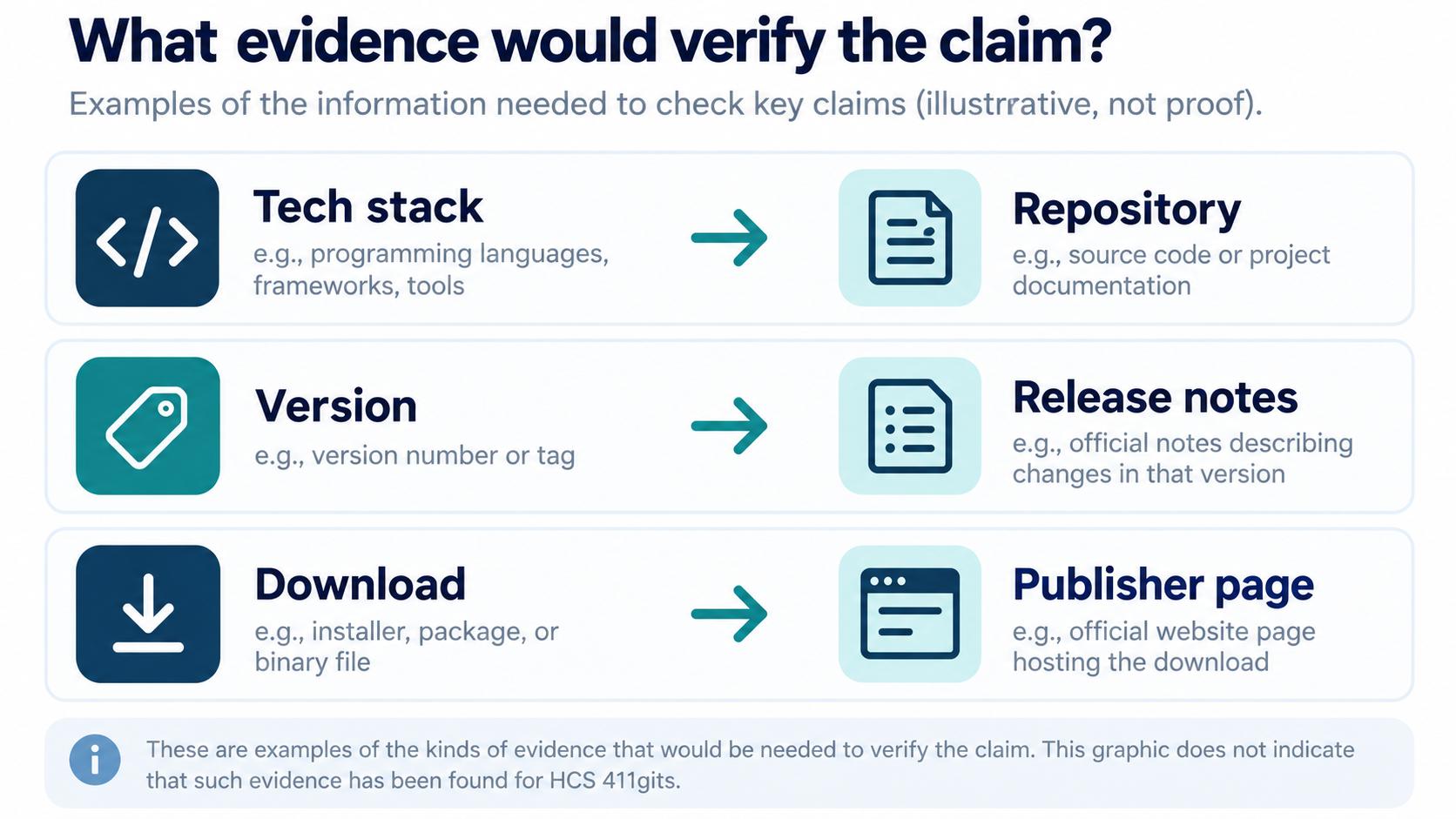
A useful way to judge a claim is to ask what document would prove it. I recommend distinguishing an official record from a third-party narrative before repeating any specification.
| Claim you may see | Evidence needed to confirm it | What you can conclude without that evidence |
|---|---|---|
| “Built with a named programming language” | Identified repository, developer documentation, or publisher statement | The language is a guess |
| “Uses microservices or a particular database” | Architecture document or inspectable implementation | The architecture is unconfirmed |
| “Has a new version” | Publisher release notes and an identifiable version number | An update claim alone proves little |
| “Official download available” | Publisher-controlled download page tied to the same product identity | The file’s origin is uncertain |
| “Part of Highway Capacity Software” | McTrans documentation explicitly connecting the names | Similar letters do not establish a connection |
This is the same evidence problem discussed in TechMezz’s guide to what can be verified about Mogothrow77 software. When a name lacks a traceable maintainer, specific technology claims need direct support.
How would software like this be built in practice?
The following is a general software engineering model, not a reconstruction of an HCS 411gits project. A real team might combine or reorder these stages based on whether the application runs in a browser, on a desktop, or inside a private organization.
1. Define the users and the job
Developers begin by asking who will use the system and what tasks it must complete. For example, a team building a workflow tool might document user roles, the data each role can view, the actions they can perform, and what happens when a request fails.
The output should be specific enough to test. “Make reporting fast” is vague; “generate a report from approved records while showing a clear error for missing inputs” gives designers and testers something concrete to evaluate.
2. Choose the structure before choosing fashionable tools
A design can separate the interface, business rules, and data storage so each has a clear responsibility. Depending on the need, one deployable application may be simpler to maintain than several services; extra services make sense only when their benefits justify the operational work.
The design should also identify sensitive data, outside integrations, backup needs, and who can change settings. No public evidence shows which of these choices, if any, were made for HCS 411gits.
3. Implement small, reviewable changes
Developers can divide the work into features, store changes in version control, and review a proposed change before merging it. GitHub’s explanation of pull requests shows how a change can carry discussion, code differences, and automated checks in one place.
That describes a common workflow rather than proof that this particular project uses GitHub or Git. Even the word “gits” in a search phrase does not establish a version-control system or repository.
4. Test behavior and security
Unit tests check small rules, integration tests check connections between components, and end-to-end tests follow a user task through the application. GitHub’s continuous integration documentation explains how teams can build and test new changes when code is committed, then see the results during review.
Security belongs throughout development. NIST’s Secure Software Development Framework recommends practices that can be integrated into different development life cycles; it does not certify any software merely because an article mentions it.
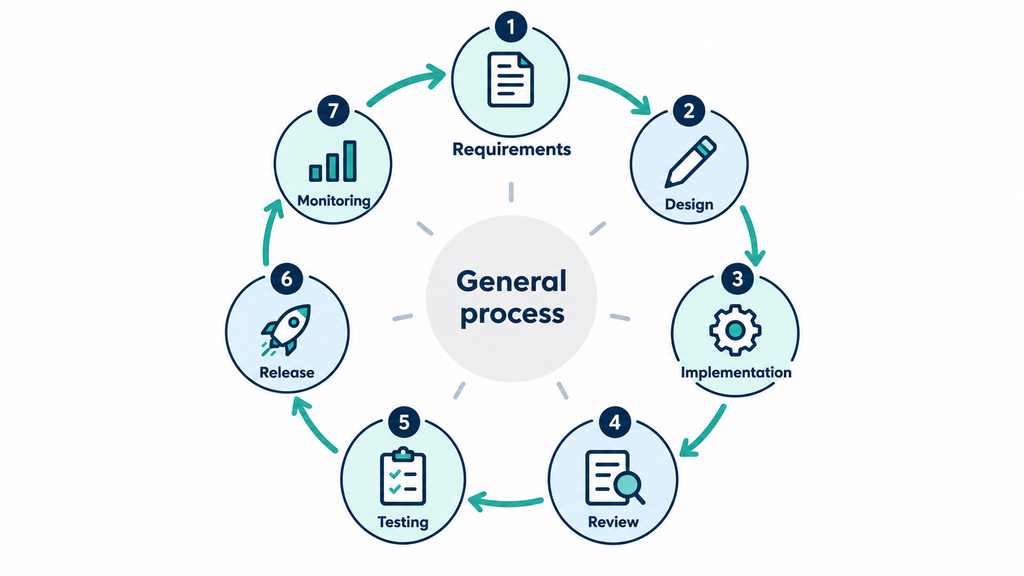
5. Release, observe, and revise
Before releasing an update, a team should check compatibility, record what changed, and plan how to recover if the release fails. After release, error reports and user feedback help the team decide which problems to fix next.
A public version history makes these claims easier to inspect. For comparison, McTrans provides a version history for its actual HCS product, with dated changes to named modules. That record should not be transferred to a different name without an explicit official connection.
A simple example of the design decisions
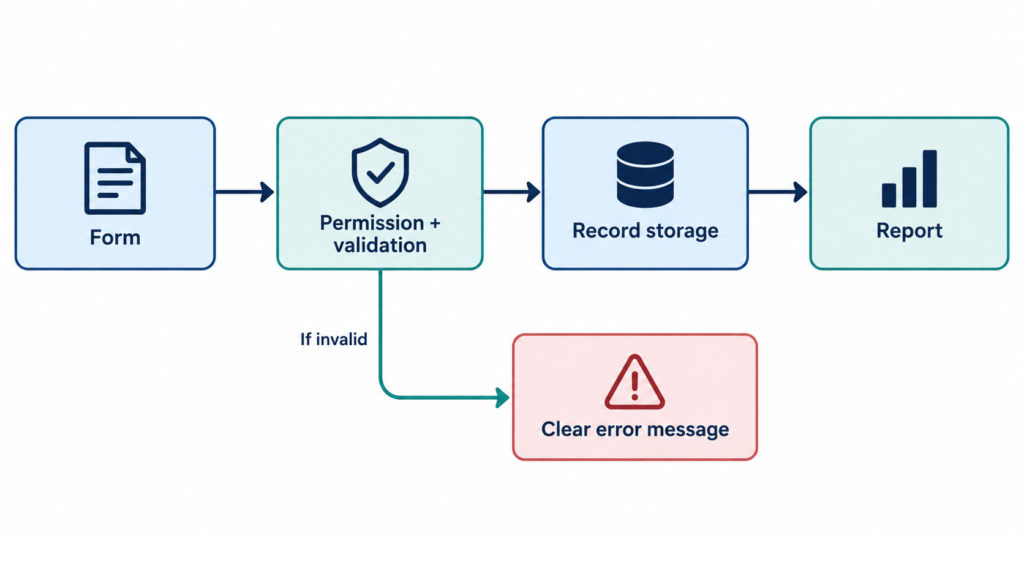
Imagine building an internal tool that accepts a form, checks a user’s permission, saves a record, and produces a report. The interface would gather the input, the application logic would validate it, and storage would retain the approved record.
You could test an incorrect value, a user without permission, and an interrupted save, then verify that each produces the intended result. This example shows how to reason about layers and tests; it is not a description of HCS 411git’s features.
| Design question | Example decision | Why it matters |
|---|---|---|
| Who can see records? | Define roles before implementation | Prevents accidental access |
| What happens on bad input? | Reject it with a useful explanation | Protects data quality |
| Can an update break old reports? | Run a representative regression test | Catches changes in existing behavior |
| What if deployment fails? | Keep a documented recovery path | Reduces disruption |
How to check a version or download safely
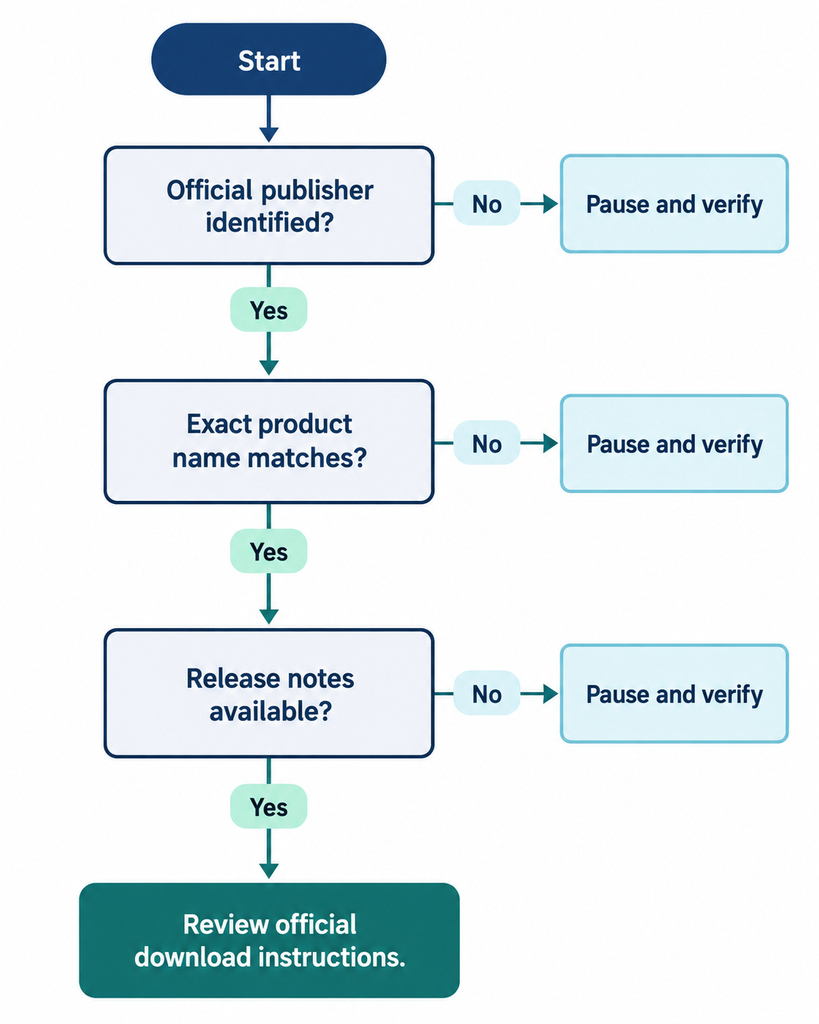
If you found a page advertising HCS 411gits, start with the identity behind the page. A confident blog post, a download button, or a version number in a title cannot by itself establish that a publisher maintains the software.
- Identify the publisher. Find a consistent organization name, product page, support contact, and documentation under the publisher’s control.
- Match the exact name. Check that the official materials use “HCS 411gits,” not just “HCS” or another similar term.
- Find a release record. Look for a dated version number, changes, supported systems, and update instructions from that same publisher.
- Check the distribution route. Obtain software only from the verified publisher’s channel or an official store linked by that publisher.
- Pause if the trail breaks. Ask the organization that supplied the name for its vendor documentation before installing a file or sharing credentials.
This caution is especially useful when a page instructs you to run a command as part of a supposed verification step. TechMezz’s guide to suspicious CAPTCHA instructions explains why such prompts deserve extra scrutiny.
FAQs
Is HCS 411gits a real software product?
The exact name appears in third-party articles, but I could not tie it to an authoritative product page, developer, or technical record. A private tool could still exist under that name; the public evidence is insufficient to confirm its identity or features.
What programming language was HCS 411gits built with?
There is no verified public source identifying its programming language. Lists of possible languages in online explainers describe plausible options, not a demonstrated technology stack for this exact product.
Is there an hcs 411gits new version?
I could not confirm a release under that exact name through a publisher-controlled changelog. McTrans maintains updates for its Highway Capacity Software, but that does not establish an HCS 411gits release.
What does the phrase new software name hcs 411gits mean?
It appears in searches and article titles, but the phrase alone does not show a formal rename or new launch. A reliable name change would need a notice from the developer connecting the old and new names.
Can I download HCS 411gits safely?
First verify who publishes it and whether their official documentation uses that exact name. If the source cannot be traced, I recommend waiting for the publisher’s verified download instructions instead of trying a file linked from an unrelated article.
Conclusion
The honest answer to how hcs 411gits software is built is that its exact build cannot currently be verified from a reliable public technical source. You can understand the usual steps behind a software product, but assigning those steps or any specific stack to this name would turn a useful illustration into an unsupported claim.
If someone has sent you a version number, installer, or product page, compare it with the publisher and release checklist above before acting. Share this guide with anyone trying to distinguish a documented product from a convincing but unverified description.